|
 Effexis Software Home
Achieve Planner
Order Now
Download Free Trial
Take the Tour
Get Organized
Plan Your Work
Work Your Plan
Capture New Work
Productivity Tools
Screenshots
Technical Support
Case
Studies
Contact Us
Works with Windows 2000, Windows XP, Windows 2003
Server, Windows Vista,
Windows 7, Windows 8
Customer
Feedback
“I was reading over the testimonials on your website and I have to agree with all of them. I have spent the
last 10 years working really hard on my time management skills and using the Tony Robbins RPM system.
Honestly I have to say that by using the Achieve Planner system, it has helped me focus much more on my RPM process
because I was not wasting the time I was before managing the system. I have gotten a very good process down now and
my efficiency and effectiveness has skyrocketed.”
Mike Suco
“I purchased AP for my
business and it has been a huge help in tracking and
getting things done. It is straightforward and easy to
use. It makes getting projects done much easier and tops
Outlook and other tools that are either featureless or
too huge and complex.”
Ray Diaz
“This by far the most intelligent piece of
time-management software I’ve come across and I’ve tried
a few.”
Joe Kissoon
“I’ve been using it for almost a month, and I’ve found
it to be very helpful in managing my dissertation project.”
Greg
“I’ve looked at several personal productivity / task
management software packages over my 9 year career in
IT... I have to say that Achieve Planner is hands
down the best personal productivity app I’ve ever used!
It is quick to learn & awesome at unifying all of my
life’s commitments while not skimping on the details if
you should need them. I also love the ongoing time
management tips & messages of encouragement which really
help keep me focused and remind me WHY it is important
to stay on-track! Thanks Effexis!”
Greg Pickrell
“Wow! I’ve been waiting
20 years for this product!”
Fernando Chapa
“Your Achieve Planning software is the best I’ve used.
Continue the great work!”
Dan Cross
“Achieve Planner is the first
time-management software program that I have found that
really allows me to organize myself in a way that is
more consistent with my wholistic lifestyle.
Believe me I have checked out a few
programs and have an entire shelf of books and videos in
addition to all the workshops and seminars I have
attended.
It has been an up hill battle for me
as a very right brained, ADDer (Definition of ADDer:
Someone who finds life so exciting and full of
possibilities that they can’t help but keep adding more
and more to their already fabulous life!)
For me the point of managing my time
is to be able to live with minimal stress and have even
more fun, pleasure and prosperity... and Achieve Planner
helps me do that!”
Caroline Bell, PhD
“I have tried just about
every piece of time and project management
software on the Internet, as well as most of
the goal setting software that’s out there
too!
I have to say
that Acheive Planner is _the best_
program I have ever used.”
Dean W. Charron
“Also, thanks for a brilliant
product. I have tried several time
management type applications prior to
discovering "Achieve" and they all seemed to
lack something.
After loading the achieve trial I
purchased the product very quickly
afterwards as I could see the potential.
I’ve now been working with "Achieve" for
three weeks and will certainly recommend it
to others.
It does exactly what I
need and gives me a method of managing
the multiple projects that my daily work
involves.”
Paul Ralph
Scotland UK
“Thanks for making such an
awesome product. This is far superior to any I’ve used
before!”
Stephanie Chapman
“I work from home, and use to
have my work schedule, ideas, and notes, spread between
two desks, on multiple pieces of paper or just held in
my head.
Achieve Planner has
changed all of that. This tool is incredible, and has
helped me organise everything so that I now have a solid
plan to work to. I know exactly
what I have to do each day, and I can promise you one
thing. Planning for the weeks and months ahead has never
been this fun! Keep up the great job!”
Andy Williams
“Thanks so much for making a great product. It’s really
helping me get organized in my personal and professional
life.”
Darren
“It’s a great software product and we both love to use
it. We both tried to use Tony Robbins OPA/RPM system for
years.
My husband managed to make some progress with it, but it
was a little too complicated.
The Achieve Planner does everything that OPA should have
done and it is perfectly integrated with Outlook. More
people need to know about it”
Liz Blackham
“I’d like to say that I really enjoy working with AP
planner.
You made it so ergonomic. We can reach easily and
rapidly any task, contact or project.
The keyboard shortcuts are very useful and intuitives.
There’s a lot of possibility in this software (I didn’t
use every one of them yet) and I can’t hardly wait for
the next developpements.
Really, Bravo !”
Richard Lavoie
“Your Acheive Planner is a work of genius. I recently
purchased the
productivity suite and am stunned by all that this
program offers. It’s like having a 24/7 personal
assistant and personal life coach all rolled into one.
I just want to thank you for the time, effort, and
creativity you’ve put into developing this truly
revolutionary product.
May you live long and prosper!”
Mercedes Goldcamp
“I am in love with Achieve Planner. It has made a
significant difference in how I organize my time and I
am accomplishing more than ever without that feeling of
being overwhelmed. Thank you for developing it.”
Bev Dugar
“This is the very best planning system I have ever used.
I manage a small business and run about 5 or 6
departments by myself.
Achieve Planner has made it possible to effectively
track all of my tasks and projects in one system. Thank
you. Keep up the great work.”
Jesse
“The tutorials are excellent - short and to-the-point.
They clearly explain the steps needed to achieve a
task in Achieve Planner without a lot of extraneous
commentary.
I was/am very impressed. There are a lot of garbage
tutorials ’out there’. Yours are excellent & I have
found them most useful.”
Michael
“I’m finding it quite helpful. I’ve just been using the
basics for about 3 weeks now and already starting to
feel like I have a better grip on my week.
It allows me to take a realistic look at the amount of
time I have available and then plan my task time
accordingly.
I’m finding fewer tasks are "slipping between the
cracks", plus I’m not as frustrated by not trying to
meet unrealistic expectations.
The integration with Outlook is also very handy in that
I can easily assign Tasks to staffers.”
Mark Herman
“Btw, I am IMMENSELY pleased with the Achieve Planner. I
am a software engineer myself, and appreciate the
detailed attention to the finish the careful engineering
that has gone into the features of the software. Very
well done!”
Arthur Vanderbilt
“I have been using this tool for about a month - I have
tested many,
many, software tools for project & task planning before
and have NEVER found anything that has immediately and
positively impacted the way I work.
This is a GREAT tool and I only wish I’d found it years
ago.
Thank you!”
Paul Sheard
“You have a very good program and its the best I have
seen. Thanks for the help and I look forward to using it
daily.”
Paul R.
“I sent you an email earlier on Procrastination and the
wins I had from that course. I just thought the wins
were big until I started applying the technology of your
Time Management course.
Just after the first week of using Time Charts and
Project Blocks my production has soared mainly due to
NOT multi-tasking and doing what I'm doing while I'm
doing it.
I have benefited greatly from using your technology and
your software program, Achieve Planner.”
James Owens
|



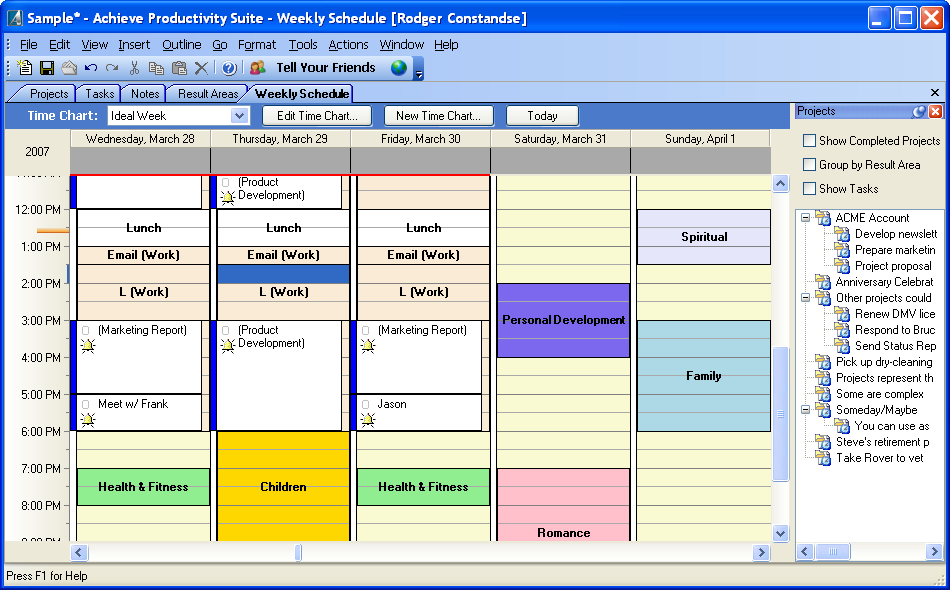
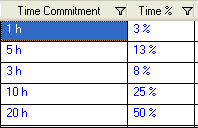 The
weekly planning wizard tool helps you plan the
week ahead. It helps you decide what projects are the
most important for the upcoming week, and how much time
you want to commit to each project. You can then drop
project blocks into the schedule based on your chosen
time commitments. Weekly planning with project blocks
helps you put first things first.
The
weekly planning wizard tool helps you plan the
week ahead. It helps you decide what projects are the
most important for the upcoming week, and how much time
you want to commit to each project. You can then drop
project blocks into the schedule based on your chosen
time commitments. Weekly planning with project blocks
helps you put first things first.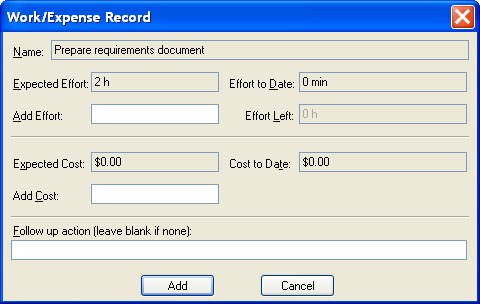
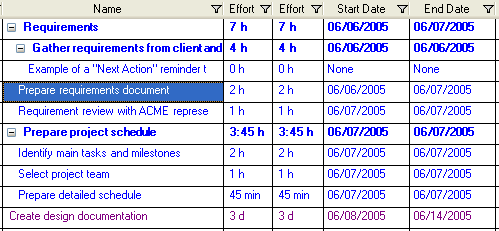
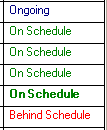 You
can use the Reschedule command anytime you make a
significant change to your projects, tasks, or weekly
schedule to re-compute the start/end dates.
You
can use the Reschedule command anytime you make a
significant change to your projects, tasks, or weekly
schedule to re-compute the start/end dates.

